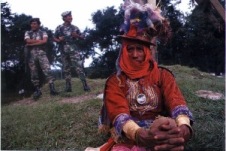
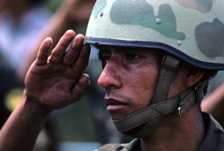
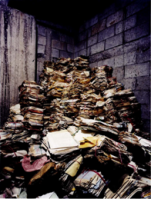
| Photo Credits: (above, left to right) © Jean-Marie Simon, © Jean-Marie Simon, © Misty Keasler, © Jean-Marie Simon, © John D. Willard. |
The National Security Archive
Guatemala Project
Director: Kate Doyle (kadoyle@gwu.edu)
|
|
Death Squad Diary
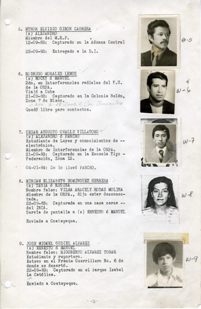
Guatemala Postings
From Silence to Memory
Guatemalan Court Convicts National Police Chief
The Final Battle: Ríos Montt's Counterinsurgency Campaign
The Pursuit of Justice in Guatemala
REMAINS OF TWO OF GUATEMALA'S DEATH SQUAD DIARY VICTIMS FOUND IN MASS GRAVE
27 Years Later, Justice for Fernando García
UNDREDACTED: Notes from the Evidence Project: "The Echo of Pain of the Many"
UNDREDACTED: Astonishing Discovery of Remains of Guatemalan Death Squad Diary Victims
UNDREDACTED: Otto Pérez Molina, Guatemalan President-Elect, with "Blood on his hands"
UNDREDACTED: Notes from the Evidence Project: Documentary Film, "Granito," Returns to Washington DC
UNDREDACTED: Notes from the Evidence Project: Remains of Three Death Squad Diary Victims Identified
UNDREDACTED: Notes from the Evidence Project: Human Rights Prosecutions
UNDREDACTED: "The Right to Information" Gaining Ground in Latin America?
From Silence to Memory: A Celebration of the Report of the Historical Archives of the National Police
UNREDACTED: Decades Later, NARA Posts Documents on Guatemalan Syphilis Experiments
UNREDACTED: Wikileaks Guatemala - Corruption and Crime in the National Civil Police
Sundance Premiere Highlights Guatemala Human Rights Work
Ocultó su participación al pedir la ciudadanía de EU condena a un ex-Kaibil por la matanza de cientos de guatemaltecos - Emeequis
Ex-Kaibil Officer Connected to Dos Erres Massacre Arrested in Alberta, Canada
UNREDACTED: "Guilty Verdict and 40 Year Maximum Sentence in Edgar Fernando Garcia Case."
UNREDACTED: "I wanted him back Alive." An account of Edgar Fernando Garcia's case from inside "Tribunal Towers."
UNREDACTED: "Wrenching Testimony and Historic Sentence." U.S. court convicts Dos Erres perpetrator for lying about role in massacre.
UNREDACTED: "A Personal Account of Testifying at the Guatemala Genocide Trial."
Operation Sofia: Documenting Genocide in Guatemala
Archive expert presents Guatemalan military document in international genocide case
Historical Archives Lead to Arrest of Police
Officers in Guatemalan Disappearance
The Spanish Genocide Case
Summaries of the testimony provided by five Mayan Quiché survivors and four expert witnesses
Death Squad Dossier
Military logbook of the disappeared
The Guatemalan National Police Archives
Drugs and The Guatemalan Military
A Report from the Texas Observer
The Guatemalan Military: What the U.S. Files Reveal
Colonel Byron Disrael Lima Estrada
U.S. Policy in Guatemala, 1963-1993
The CIA and Assassinations
The Guatemala 1954 Documents
Postings from the Archive's Mexico Project:
Dear Mr. President: Lessons on Justice from Guatemala
Mexico's Southern Front: Guatemala and the Search for Security
|
Update: The Guatemalan Death Squad Diary and the Right to Truth
National Security Archive Electronic Briefing Book No. 378
Posted - November 22, 2011
For more information contact:
Kate Doyle - 646/670-8841
kadoyle@gwu.edu
English / Spanish
Washington, D.C., May 3, 2012 – On April 25, 2012, Kate Doyle, senior analyst and director of the Guatemala Documentation Project at the National Security Archive, provided expert
witness testimony before the Inter-American Court of Human Rights in the case of the Diario Militar (Case 12.590, Gudiel Álvarez et al.
(Diario Militar) vs. Guatemala) during the Court's 45th Extraordinary Session held in Guayaquil, Ecuador. Doyle's prepared testimony was
followed by questioning by the Petitioners' legal representatives, and nearly 45 minutes of questioning by the seven judges. The representatives for
the State chose to not ask questions.
The following text is an excerpt of Doyle's testimony.
Read more
About
the Project - In July 1994, the Guatemalan government and armed rebel groups signed the Human Rights Accord establishing the Historical Clarification Commission. That same month, the National Security Archive began work on a Guatemala Documentation Project, an effort to obtain the release of secret U.S. files on Guatemala. The project's first objective was to support the human rights investigations of the UN-sponsored Historical Clarification Commission, charged with analyzing the origins of the country's brutal 36-year civil conflict. After the commission published its report in 1999, the Archive began working with Guatemalan human rights organizations to mine the U.S. records for use in several pivotal human rights cases.
In the years that followed, the project also assisted in the dissemination and analysis of the first records to emerge from Guatemala's secret archives. In partnership with several U.S. human rights groups, project director Kate Doyle made public the Guatemalan "death squad dossier" in 1999, a military logbook chronicling the forced disappearance of dozens of citizens in the 1980s. In 2002, Doyle provided evidence and expert testimony in the Myrna Mack trial, which ended with the conviction of a senior military officer for planning and ordering Mack's assassination in 1990. Doyle currently serves as an advisor to the massive recovery effort launched by the Guatemalan human rights prosecutor's office in 2005 to rescue, clean and organize for public access millions of pages of records from the former Guatemalan National Police. She is also involved as an investigator and analyst in ongoing human rights legal action, including the international genocide case in Spain and the case of the "death squad dossier," currently before the Inter-American Commission. |
|
NSArchive's Kate Doyle wins Prestigious ALBA/Puffin Award for Human Rights Activism
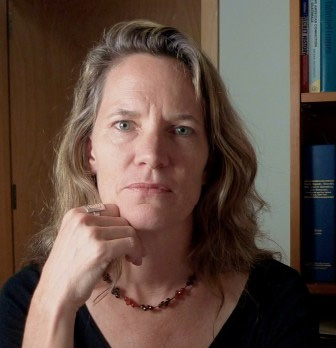
Kate Doyle, Director of the Evidence Project at the National Security Archive, photo courtesy of Skylight Pictures from GRANITO.
|